
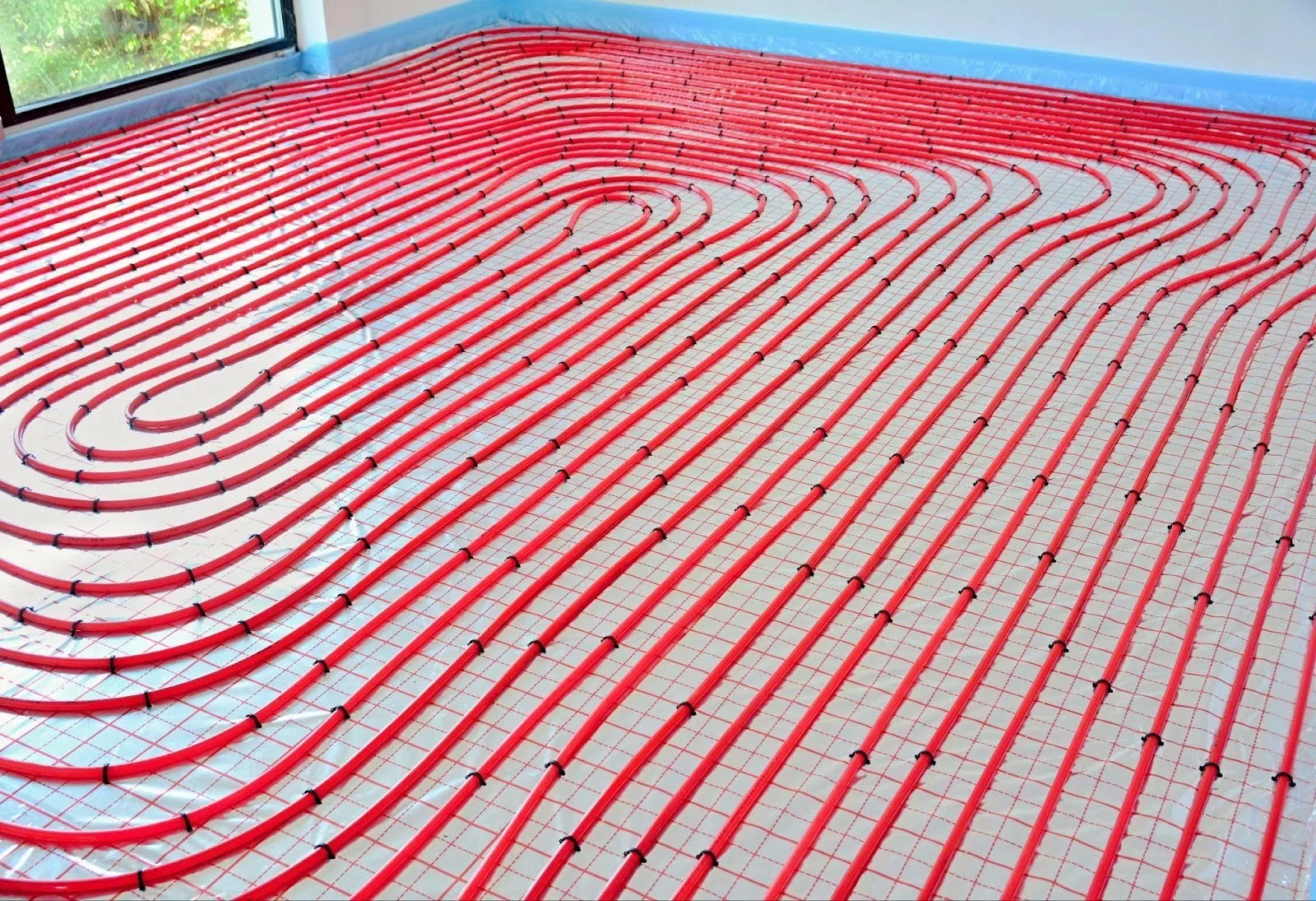
A radiant heating system heats a home by warming surfaces instead of blowing hot air through ducts. Radiant floor heating uses hydronic tubing or electric mats under the floor to deliver steady, even comfort. Many homeowners choose this heating for its energy-efficient floor heating, which reduces drafts, limits temperature swings, and helps keep rooms comfortable at lower thermostat settings.
Stay comfortable without the drafts
Most homes rely on furnaces, so a radiant heating system is not something the average homeowner knows a lot about. As plumbing professionals, we answer the same questions all the time: what radiant heat is, what it costs to run, how long it takes to warm up, and how boilers handle space heating and hot water safely.
This guide covers the classics of radiant floor heating, including zoning, flooring compatibility, maintenance, and realistic expectations for energy-efficient floor heating.
What is a radiant floor heating system?
Most homes use hot air and a system of ducts for heating. Radiant floor heating works differently. Instead of heating air and blowing it into rooms, radiant heat warms the floor surface, so the warmth rises evenly throughout the space.
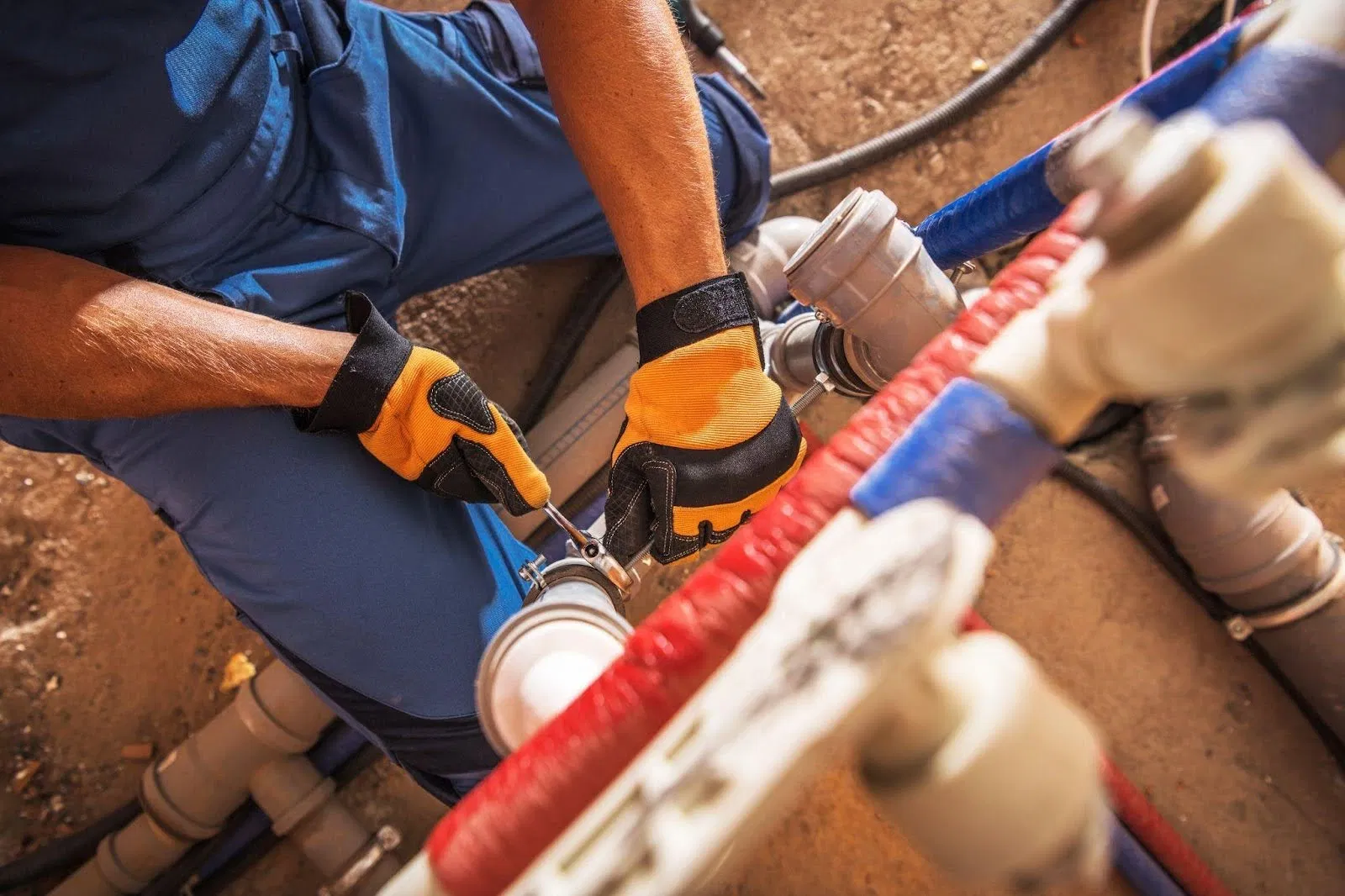
Most systems use boilers to heat water and distribute it throughout the house. The system pumps warm water through dozens or hundreds of feet of special pipe installed throughout your home. That even, consistent heat keeps your home at your desired temperature longer than conventional methods, because it does not dissipate when the blower shuts off.
Homeowners often describe the comfort as “steady” because the room does not swing between hot and cool the way some forced-air systems do.
How a radiant heating system works
A radiant heating system looks simple on the surface, but good performance comes from design and controls. Here’s the basic process:
1. Heat the water or energize the heating elements
Hydronic systems use a boiler to heat water. Electric systems use heating cables or mats under the floor.
2. Move heat through the floor
Hydronic systems circulate warm water through tubing loops, typically connected to a manifold. Electric systems warm the floor directly through the heating elements.
3. Warm the space from the ground up
The floor becomes the “radiator,” and the room warms more evenly without relying on a blast of moving air.
4. Maintain comfort with controls
Thermostats, sensors, and zoning help the system hold a steady temperature.
Common questions about radiant heating systems
What’s the difference between hydronic and electric radiant floor heating?
Hydronic systems circulate warm water and work well for larger areas. Electric systems use heating mats and are best suited for smaller spaces, such as bathrooms.
What flooring works best with radiant floor heating?
Tile and stone work great. Use engineered wood or vinyl rated for radiant heat, and avoid thick carpet, as it reduces heat transfer.
Is radiant floor heating an energy-efficient form of floor heating?
It is, especially in well-insulated homes with good zoning and controls. Efficiency depends on design and how you run the system.
Can I add radiant floor heating to an existing home?
Yes, but access matters. It’s easiest during remodels, basement finishes, or flooring replacement.
How often should I service a radiant heating system?
Service the boiler and key components annually. Hydronic systems may also need periodic checks for pressure, air, and controls.
Why are some parts of my floor warmer than others?
Common causes include air in the lines, balancing issues, insulation gaps, sensor placement, or flooring changes. A technician rebalances and troubleshoots.
Does radiant heat cost less to run than a furnace?
Often, yes, but it depends on insulation, fuel rates, and system design. Radiant heat stays more consistent, which reduces cycling.
Does a radiant house take a long time to heat up a room?
It can. Radiant heating warms the floor mass first, so that it may feel slower at the start. Once warm, it holds steady longer than forced air.
Can a boiler be used for potable water and a radiant heating system?
Yes, but it requires the right design. Most systems use a closed loop, and potable water should stay properly separated for safety.
How do boilers heat drinking water?
They usually heat potable water indirectly through a coil or heat exchanger, so boiler-loop water doesn’t mix with drinking water.
Can I use different fuel sources for my radiant heating system?
It depends on the boiler. Natural gas is common, and alternative fuels must be matched to the boiler design to avoid extra wear and maintenance.
Can I cool my home with a radiant heating system?
Not effectively. Without refrigeration and humidity control, radiant systems won’t provide meaningful cooling.
Does a radiant heating system help with allergies?
It can. Radiant heat doesn’t blow air through ducts, so it may reduce the amount of dust and allergens circulating in the air.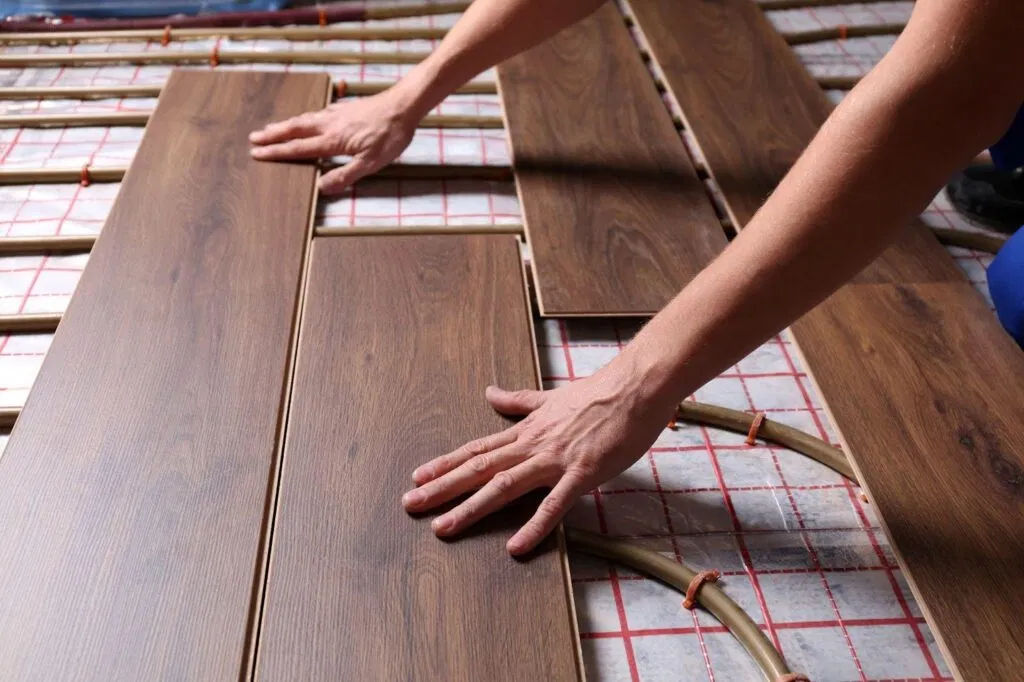
Benefits of radiant floor heating
Homeowners choose radiant heat for comfort, but the benefits go beyond “warm floors.” A well-designed system delivers steady, even warmth, changing how the whole home feels in the winter.
- Even heat distribution: Warmth rises across the entire floor surface, so rooms feel more consistent with fewer cold spots or “drafty corners.”
- Quiet operation: No loud blower cycling on and off — only steady heat in the background.
- Less drafty comfort: Radiant doesn’t rely on moving air to deliver heat, which makes spaces feel calmer and more comfortable.
- Comfort at lower setpoints: Because the floor and surrounding surfaces feel warm, many homeowners stay comfortable without cranking the thermostat, supporting energy-efficient floor heating goals in the right setup.
- Flexible design: You can heat targeted areas like bathrooms, kitchens, or basements, or build a whole-home system with zoning for better control.
- Cleaner feel in many homes: With less air movement than forced air, some homeowners notice less dust circulation, especially when paired with routine cleaning.
Common mistakes to avoid
Radiant heat works best when expectations match how it operates.
- Expecting instant heat: Radiant warms more gradually than a furnace, especially in heavier floor assemblies.
- Skipping insulation planning: Insulation under tubing or mats helps direct heat upward where you want it.
- Choosing flooring without checking compatibility: Some materials transfer heat better than others, and some products require radiant ratings.
- Over-zoning without a plan: Zoning adds comfort, but it also adds design complexity if you build too many zones without a clear intent.
- Neglecting the heat source: Boilers, pumps, and controls still need routine service.
Data, statistics, and research insights
Radiant heat performance depends more on design than on a universal rule. Heat-up time varies based on insulation, floor material, system type, and how the home operates day to day. Many homeowners who love radiant heating treat it as a “steady comfort” system rather than a “quick blast” system.
If you want true energy-efficient floor heating, focus on insulation, zoning, and control strategy. Those decisions often matter as much as the equipment itself.
Tools and products
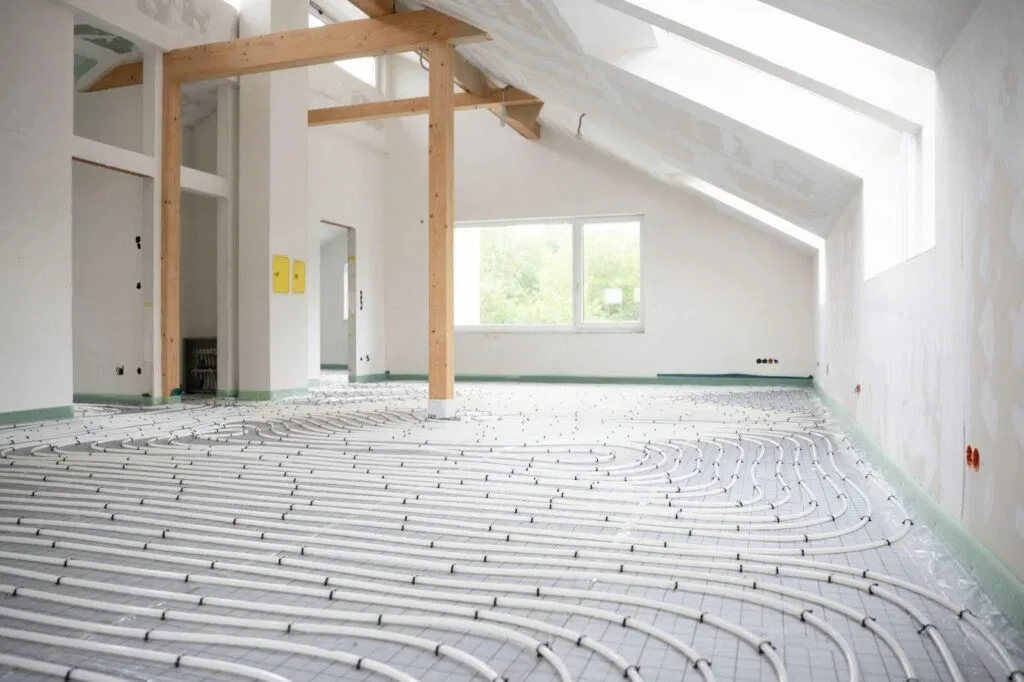
A well-built radiant heating system typically includes:
- Boiler or electric heat source (depending on the system type)
- Manifold with balancing (for a hydronic system)
- Specialized tubing (for hydronic) or heating mats (for electric)
- Circulator pumps and mixing controls (for a hydronic system)
- Thermostats and, when appropriate, floor sensors
- Air elimination and pressure management components (for a hydronic system)
- Proper insulation under the floor assembly
The right design helps radiant floor heating run evenly, stay comfortable, and perform efficiently.
Get radiant comfort with Salisbury Plumbing
A radiant heating system delivers quiet, steady comfort by warming surfaces instead of pushing hot air through ducts. When you design and install radiant floor heating with proper insulation and controls, you enjoy reliable comfort and realistic energy-efficient floor heating benefits.
If you have questions about boilers, want help planning a radiant install, or need service on an existing system, contact Salisbury Plumbing to help you choose the right approach and keep it running smoothly.